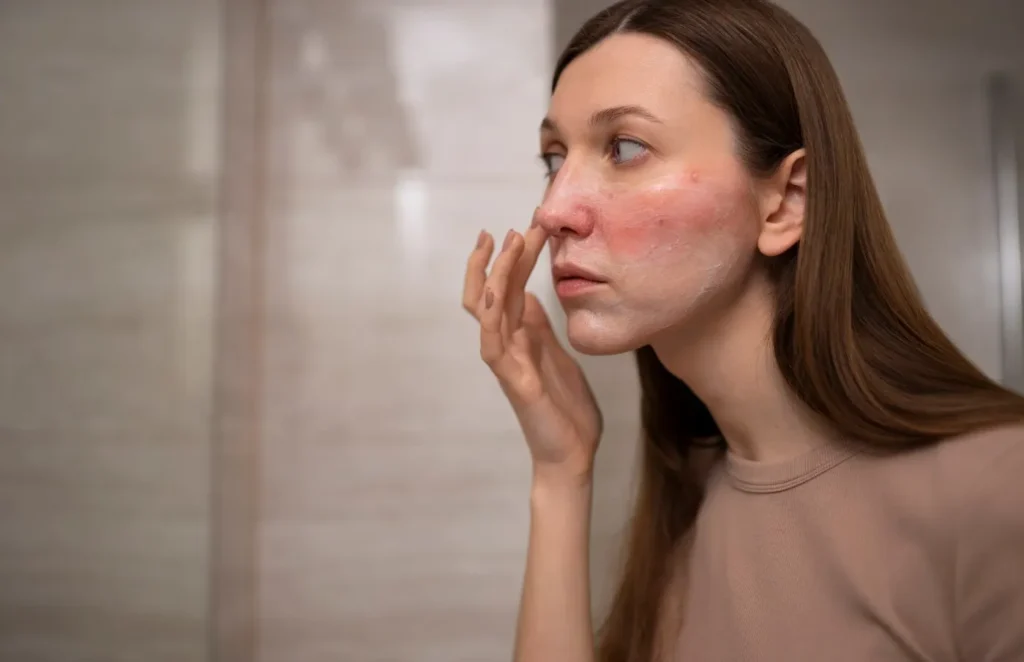

If your face ever feels oily in some areas and dry in others at the same time, trust me you are not alone. Combination skin basically means different parts of your face behave in completely different ways.
The simple rule is that you should not treat your whole face the same way. Dry areas need light and steady hydration, while oily areas need gentle oil control. Ingredients like niacinamide and hyaluronic acid help maintain this balance without making the skin feel heavy or greasy. Using very strong cleansers or heavy creams can actually make things worse. Dry areas can become more irritated and oily areas can produce even more oil. That is why a simple and consistent routine usually works much better than using too many strong products at once.
Why is my face oily and dry at the same time?
Combination skin is when some parts of your face feel oily while other parts feel dry at the same time. This usually happens because the center of the face, like the forehead, nose, and chin, produces more oil, while the cheeks produce less and dry out more easily.
When the skin is dehydrated or the barrier is not fully balanced, the oily areas can become even more active and produce extra sebum. At the same time, the dry areas start feeling tight, rough, or flaky. This is why the skin can feel both greasy and dry together.
The real issue is using the same products all over the face. Harsh products can make dry areas worse, and heavy creams can make oily areas worse.
The Best Lightweight Ingredients that hydrate without making you look greasy
Combination skin needs simple, light ingredients that keep it hydrated without feeling heavy or oily. I have noticed that water based humectants work best because they pull moisture into the skin and still feel comfortable throughout the day.
Niacinamide is one of those ingredients I keep going back to. It helps calm down excess oil in my T zone, but what I like more is how it slowly makes my skin feel more even overall. My skin does not swing as much between too oily and too dry when I use it regularly.
These are my basic hydration support ingredients. Hyaluronic acid gives that plump hydrated feeling, especially when my skin feels tight, and glycerin just keeps everything soft without any greasy layer. I usually notice my skin looks less dull when I keep these in my routine.
Whenever my skin feels irritated or a bit sensitive, I reach for these. Cica has helped calm redness on my cheeks more than once, and panthenol feels very soothing when my skin is stressed from breakouts or weather changes. It keeps things very simple and calm, especially with soothing calming ingredients reduce redness skin irritation.
Green tea is something I started using mainly for my T zone oiliness. Honestly, it helps keep shine under control without drying out the rest of my face. My skin just feels more balanced on days I use it.
How I clear T-zone breakouts without drying out my cheeks
Combination skin behaves better when I stop treating my whole face the same way. My T zone usually needs help with oil and clogged pores, while my cheeks need softness and hydration.
Salicylic Acid (BHA)
This is my go to when my T zone starts acting up. Since it is oil soluble, it goes inside the pores and clears out the buildup. I only use it on my T zone a few times a week because if I use it everywhere, my cheeks get dry very quickly. This works well with other exfoliating acids for smooth skin.
Polyhydroxy Acids (PHAs)
PHAs are what I use when my skin feels sensitive but still needs light exfoliation. They feel much gentler compared to stronger acids. Personally, I like how they smooth my skin without making it sting or feel tight.
Azelaic Acid
Azelaic acid is one of my favorites because it does more than just fight acne. It helps calm active breakouts and also slowly fades the dark marks left behind after pimples. I noticed my skin tone looking more even when I stayed consistent with it.
Zinc PCA
Zinc PCA is what I use when my skin feels extra oily or unpredictable. It helps control shine in my T zone, but what I like is that it does not make my skin feel dry or stripped. It feels more like balance rather than control.
My simple day and night skincare routine
Morning Routine
- I wash my face with lukewarm water or a gentle non foaming cleanser depending on how my skin feels that day
- Sometimes I use a hydrating toner, but only when my skin feels a bit dry or tight
- I take a few drops of niacinamide serum and spread it all over my face so my T zone stays less oily without feeling heavy
- I use a light gel moisturizer and usually add a little extra on my cheeks because they dry out faster
- In the morning, I never skip sunscreen. I use a light fluid or gel sunscreen so my T zone does not feel sticky or greasy during the day
Night Routine
- I cleanse my face gently to remove sunscreen, oil, and daily dirt without making my skin feel stripped
- On some nights, I use salicylic acid only when my T zone feels clogged or I start getting small breakouts
- I apply a hydrating serum on slightly damp skin when my face feels dry or dehydrated
- I finish with a moisturizer that supports my skin barrier, using a bit more on dry areas and keeping it light on oily areas
Listen to Your Skin: How to Change Your Routine When Needed
Your skin changes with weather, stress, and hormones so your skincare routine should not always stay the same. Combination skin especially needs small changes based on how it feels each day.
In hot and humid weather
Your skin makes more oil. At this time use light products like gel based face wash and oil free moisturizers. If your T zone gets oily or clogged you can use a BHA exfoliant a few times a week only on that area.
In cold and dry weather
Your skin loses moisture more easily, especially on the cheeks. You should reduce exfoliation and use a thicker moisturizer that has ingredients like ceramides or fatty acids.
During hormonal breakouts
Usually around your jawline or T zone, do not over wash your face or strip your skin. Keep your normal routine the same and just use a spot treatment with ingredients like zinc or cica on the breakouts.
When your skin suddenly feels unbalanced
Go back to basics for a few days and keep the routine simple. Focus on cleanser, hydration, moisturizer, and sunscreen instead of layering too many actives at once. That usually gives combination skin time to settle down again.
Final Words
Balancing combination skin does not need expensive clinic visits or a complicated skincare routine. It needs a simple understanding of what your skin actually requires in different areas of your face.
Use lightweight hydrating ingredients like hyaluronic acid and niacinamide to keep your skin barrier healthy and balanced. Use exfoliants like salicylic acid only where needed, especially on the T-zone, where oiliness and clogging are more common.
Frequently Asked Questions
Does drinking more water fix dry patches on my cheeks?
Not really. Staying hydrated is good for your body, but dry patches on the face are usually a skin barrier issue. That needs topical skincare, not just more water intake.
Can I use facial oils on combination skin?
Yes, but only on the dry areas like your cheeks. Light oils like rosehip or jojoba can help. I avoid using them on my T zone because they can make pores feel more clogged or greasy.
Should I wash my face twice a day if my T zone gets very oily?
Not always. I have noticed that over washing can make my cheeks drier and sometimes even increase oiliness in the T zone. In most cases, a gentle cleanse at night and just rinsing with water in the morning works better.