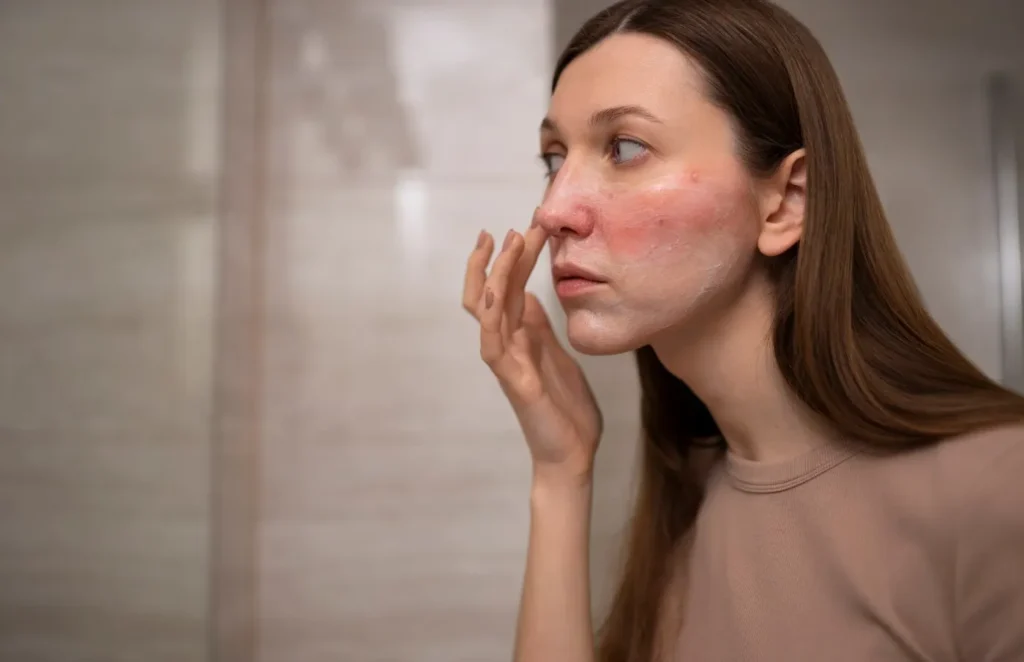

To get rid of dry skin fast, focus on restoring your skin’s moisture barrier. The easiest way is to follow a simple routine every day. Wash your face or skin with a gentle, soap free cleanser. While your skin is still slightly damp, apply a hyaluronic acid serum, then follow with a thick moisturizer that contains ceramides to lock in moisture. Also, avoid hot showers, harsh scrubs, and products with drying alcohol. If you stay consistent, your skin can start feeling softer and more comfortable within a day.
What Causes Dry Skin? Understanding the Main Reasons
Dry skin usually does not happen because of just one reason. In most cases, it is caused by a combination of factors that make it harder for your skin to hold on to moisture.
Some of the most common causes include genetics, weather and environment, harsh cleansers, too much exfoliation, and getting older.
Genetics
Your skin type is largely influenced by your genes. Some people naturally produce less oil, which can make their skin feel dry all year round.
Weather and Environment
Cold weather, dry air, and indoor heating can remove moisture from your skin, leaving it rough, tight, and flaky.
Harsh Cleansers
Using strong soaps or face washes can strip away the natural oils that help keep your skin soft and protected.
Too Much Exfoliation
Scrubbing your skin too often or using strong exfoliating products can damage the skin’s protective layer and lead to dryness.
Getting Older
As we age, our skin produces less oil and loses moisture more easily. This is why dry skin becomes more common over time.
Dry Skin vs. Dehydrated Skin: What’s the Difference?
Many people use the terms dry skin and dehydrated skin as if they mean the same thing, but they are actually different. Dry skin is a skin type that lacks natural oils, which can make it feel rough, flaky, tight, and sometimes itchy. It usually needs richer moisturizers with ingredients that help restore the skin’s protective barrier.
Dehydrated skin, on the other hand, is a temporary condition caused by a lack of water in the skin. It can make your skin feel tight, look dull, and become more sensitive. Even people with oily skin can experience dehydration. In this case, the skin needs hydrating ingredients that attract and hold moisture.
The easiest way to remember the difference is that dry skin lacks oil, while dehydrated skin lacks water. Knowing which one you’re dealing with can help you choose the right skincare products and get better results.
Ingredients I Always Look for if You Have Dry Skin
When shopping for dry skin products, always check the ingredient list for these essential ingredients. These ingredients help maintain hydration, strengthen the skin barrier, and reduce moisture loss.
Hyaluronic acid helps the skin attract and hold water, making it one of the best hydrating ingredients for dry skin. It makes the skin look plumper, smoother, and less dry.
Glycerin is a highly effective moisturizing ingredient. It draws water into the skin and helps keep it soft and hydrated throughout the day.
Ceramides are important for repairing and maintaining the skin barrier. When the skin barrier is damaged, ceramides help restore it by replenishing lost lipids. They also help prevent moisture loss, making them one of the most reliable barrier repair ingredients for deep hydration.
Squalane is a lightweight moisturizing oil that absorbs easily. It provides hydration without leaving a heavy or greasy feeling.
Shea butter is deeply nourishing and works well for very dry skin. It helps soothe irritation and leaves the skin soft and smooth.
Petrolatum is one of the most effective ingredients for preventing moisture loss. It forms a protective layer on the skin and is especially useful for very dry or cracked areas.
How Can I Hydrate My Skin Overnight Fast?
The fastest way to achieve overnight hydration is a dermatological technique called slugging. After applying your evening moisturizer, apply a thin layer of an occlusive ointment like Vaseline or Aquaphor over your face. This helps seal in moisture and supports the skin barrier overnight.
Is Vitamin C Good for Dry Skin Types?
Yes, Vitamin C can be good for dry skin, but it depends on the type you use. Not every form suits dry skin.
Pure Vitamin C, or L-ascorbic acid, is strong and acidic, so it can sometimes cause stinging or irritation, especially if your skin is already dry or sensitive.
A better option for dry skin is a gentler, oil based or oil soluble Vitamin C derivative. These are usually more stable, feel softer on the skin, and are less likely to cause irritation while still giving antioxidant benefits and supporting healthy, glowing skin.
Dermatologist Recommended Dry Skin Routine
Morning Protect and Hydrate
- Rinse face with lukewarm water.
- Use a gentle cleanser only if skin feels oily or dirty.
- Apply hyaluronic acid or glycerin on slightly damp skin.
- Follow with a ceramide based moisturizer to support the skin barrier.
- Finish with sunscreen SPF 30 or higher before going outside.
Night Repair and Deep Moisture
- Remove makeup and sunscreen with a cleansing balm or cleansing oil.
- Wash face with a mild, creamy cleanser.
- Use retinol only if suitable, and apply as directed to avoid irritation.
- Apply a thick moisturizer to lock in hydration.
- Use a small amount of petrolatum on very dry areas to seal moisture and help repair the skin barrier.
Skincare Ingredients and Habits I Avoid for Dry Skin
Sometimes fixing dry skin is not only about what I use, but also about what I stop using. Avoiding the wrong ingredients and habits has made a big difference for me.
Denatured Alcohol
I avoid this because it can dry out the skin very quickly, even if the product feels light or fast absorbing.
Heavy fragrances and essential oils
Things like perfume, lavender, or citrus oils can irritate my skin and make dryness or redness worse.
Salicylic acid in strong or frequent use
While it is good for oily skin, I avoid using it too often because it can strip too much oil from dry skin and cause flaking.
Using face brushes or harsh scrubs
I avoid anything that is too rough because it can damage my skin barrier and make dryness worse.
Applying moisturizer on completely dry skin
I always apply skincare on slightly damp skin so it locks in moisture better.
Skipping moisturizer in warm weather
Even when it is hot, I never skip moisturizer. I just switch to a lighter one so my skin still stays hydrated.
Final Words
Taking care of dry skin is mainly about being gentle with the skin and protecting the skin barrier. Consistency matters more than using strong or harsh active ingredients.
When skincare focuses on humectants, emollients, and occlusives, the skin stays more balanced, hydrated, and comfortable. Avoiding products that strip or irritate the skin can make a noticeable difference over time.
Dry skin improves with patience and a simple approach. Keeping the routine focused on hydration and protection helps the skin gradually restore its natural softness and healthy glow.
FAQs
Can showering in hard water cause chronic skin dryness?
Yes. Hard water can weaken the skin barrier and make skin lose moisture faster, leading to dryness and irritation.
Why does my skin stay flaky even though I apply oils daily?
Because oils don’t add water to the skin. They only lock in moisture, so you also need a water based hydrator first.
When is dry skin a sign of an underlying medical issue?
When it is persistent despite good skincare, it may be linked to conditions like thyroid issues, diabetes, or nutrient deficiencies.