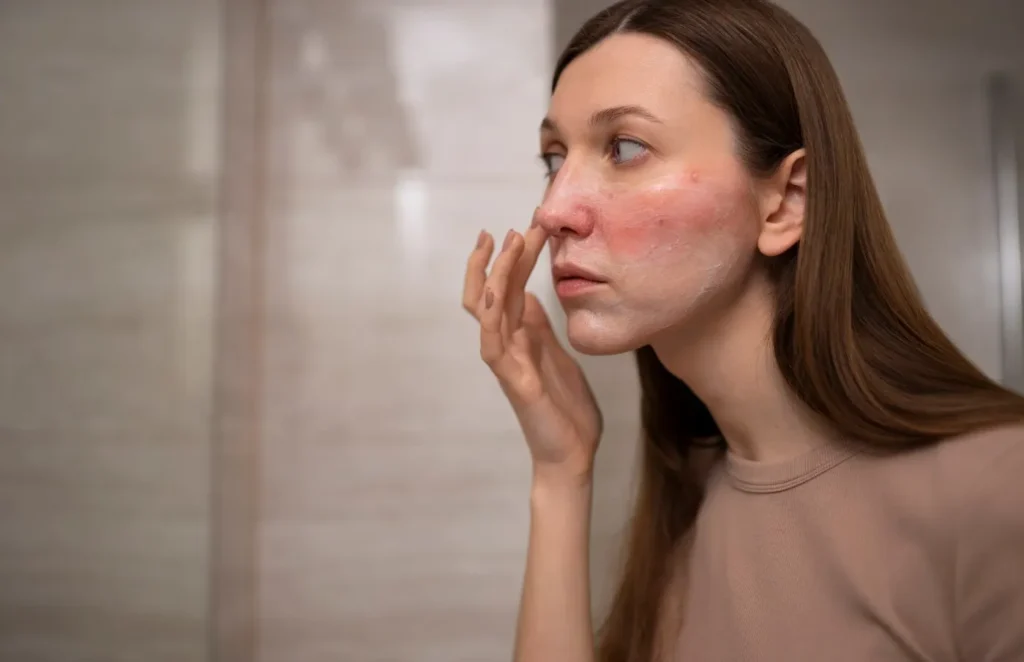

To clear acne prone skin, the goal is simple: keep oil in balance, prevent pores from getting clogged, and control bacteria that trigger breakouts. It does not need complicated steps, just a consistent routine that you actually follow daily.
A basic routine with ingredients like salicylic acid or benzoyl peroxide, along with a gentle moisturizer, is often enough to start seeing improvement in about 4 to 6 weeks. Avoid harsh scrubbing or over treating your skin. Stick to non comedogenic products and use acne treatments regularly, not randomly. This helps stop breakouts early before they turn into painful pimples or leave marks.
What causes acne?
Acne usually doesn’t come from one single reason. It develops when a few things start happening together in the skin.
Sometimes the skin produces more oil than it needs. This extra sebum doesn’t cause acne on its own, but it creates an environment where pores are more likely to get blocked.
At the same time, dead skin cells may not shed properly. Instead of clearing away smoothly, they mix with oil and start building up inside the pore. This is usually where the clog actually begins.
Once a pore is blocked, bacteria that normally live on the skin can multiply inside it. The trapped oil and low oxygen inside the pore make it easier for this bacteria to grow.
After that, the body reacts to what is happening inside the pore. This reaction is what causes redness, swelling, and the painful bumps people usually recognize as acne.
Does diet affect your skin?
Yes, diet can affect acne for many people.
Foods like white bread, sugary drinks, and processed snacks can raise your blood sugar quickly. This can lead to hormonal changes in the body that may increase oil production in the skin.
When the skin produces more oil, pores can get clogged more easily, which may lead to breakouts in some people.
Daily acne skincare routine
Morning
- Cleanse your face with a gentle face wash
- Use toner only if it actually suits and calms your skin
- Apply a light, oil free moisturizer
- Finish with sunscreen SPF 30 or higher every day
Night
- Remove sunscreen and dirt with a gentle cleanser
- Cleanse again, or use a salicylic acid cleanser if your skin tolerates it
- Apply a retinoid or acne treatment based on your skin needs
- Finish with a ceramide based moisturizer to support the skin barrier
Dermatologist approved acne treatments that work
When regular over the counter skincare is not enough, dermatologists usually move to stronger prescription treatments based on the type and severity of acne.
Medications like tretinoin, adapalene, and tazarotene are commonly used to keep pores from getting clogged in the first place. They speed up skin cell turnover, which helps with blackheads, whiteheads causes skincare routine treatments, and early stage acne. These can be very effective, but they often make the skin dry or sensitive at the beginning, so they are usually introduced slowly.
Clindamycin and erythromycin are used mainly for inflamed acne. They help reduce acne causing bacteria and calm down redness and swelling. In most cases, they are not used alone for long periods because doctors prefer combining them with other treatments to avoid resistance and improve results.
For acne that is driven by hormones, especially along the jawline, treatments like spironolactone or certain oral contraceptives are sometimes used. They work by lowering excess oil production linked to hormonal activity. These are usually considered when breakouts clearly follow hormonal patterns.
Isotretinoin is a strong oral medication used for severe or cystic acne that has not responded to other treatments. It reduces oil production significantly and targets acne at its root level. Because it is powerful, it also comes with more strict monitoring and potential side effects, so it is only used under close medical supervision.
Hormonal vs. Cystic Acne: How to Tell the Difference
Hormonal acne and cystic acne often get confused, but they behave quite differently on the skin.
Hormonal acne usually shows up on the lower part of the face, especially the jawline, chin, and sometimes the neck. It often follows internal changes in the body, like during menstrual cycles, pregnancy, or periods of high stress. These shifts can increase oil production in certain areas, which is why breakouts tend to appear in a more predictable pattern.
Cystic acne is deeper and more painful. Instead of sitting on the surface, it forms under the skin as large, swollen bumps filled with inflammation. There is usually no visible head, which makes it harder to treat with normal spot treatments. Because it develops deep inside the skin, it often takes stronger or longer term treatment to calm down and reduce the risk of scarring.
The Best Ingredients for Acne-Prone Skin Recommended by Derma
Choosing ingredients for acne prone skin is mostly about understanding what your skin needs instead of trying everything at once.
This one is commonly used for clogged pores and blackheads. It works by getting inside the pore because it is oil soluble, so it can break down oil and dead skin buildup. That is why it is helpful for small bumps and congestion. Most everyday products use around 2 percent, which is usually enough for regular use without being too harsh.
This ingredient is more focused on active acne. It works by reducing acne causing bacteria and calming inflammation, especially in red and inflamed pimples. It can be quite drying for some people, so lower strengths like 2.5 percent or 5 percent are usually better in the beginning, often in a wash form instead of leaving it on the skin for too long.
Niacinamide supports the skin rather than aggressively treating acne. It helps control excess oil, strengthens the skin barrier, and reduces redness over time. It is not a direct acne killer, but it helps the skin stay balanced while other treatments do their job.
Azelaic acid works on multiple fronts. It helps with acne bacteria and inflammation, and it also helps fade post acne marks and uneven skin tone. It is generally gentler compared to stronger actives, which makes it easier to tolerate for sensitive or reactive skin.
How to Prevent Acne Scars and Dark Spots
Scars and dark spots usually don’t form from acne itself, but from how the skin reacts while it is healing. When inflammation goes deeper, it can leave marks that take a long time to fade.
Do not pick or squeeze acne
Touching or popping pimples often pushes inflammation deeper and increases the chance of marks or uneven skin texture after it heals.
Use alpha hydroxy acids
Ingredients like glycolic acid or lactic acid are exfoliating acids for glowing skin that help the skin shed dead, pigmented cells faster. Over time, this can slowly fade dark spots and improve overall skin tone.
Add vitamin C
Vitamin C is used in the morning to help brighten the skin and support protection from environmental damage. With regular use, it can make dark spots look lighter and less visible.
Wear sunscreen every day
Sun exposure is one of the main reasons acne marks stick around longer. UV rays can make pigmentation darker, so daily sunscreen is important if you want spots to fade properly.
Final Words
Managing acne prone skin is mostly about consistency. It is not about quick fixes, but about using the right ingredients regularly and keeping your routine simple and steady. When you focus on keeping pores clear, controlling oil and inflammation, and supporting the skin barrier, the skin usually becomes more balanced over time.
In some cases, especially when acne is deep, painful, or not improving with basic over the counter care, professional help can make a real difference. Dermatologists can offer stronger treatments that also reduce the risk of long term scarring.
Frequently Asked Questions
Can I pop or shrink a pimple overnight?
You can’t fully remove it, but you can reduce it. Use a hydrocolloid patch or a little benzoyl peroxide and leave it alone. Don’t use toothpaste or random hacks, they usually make it worse.
Do I need moisturizer if my skin is oily?
Yes. Skipping it can make your skin produce even more oil. Just use a light, gel based, non comedogenic moisturizer.
How long should I wait for an acne product to work?
Give it 4 to 6 weeks at least. If nothing changes after about 8 weeks, then it’s probably not working for you.